Overview
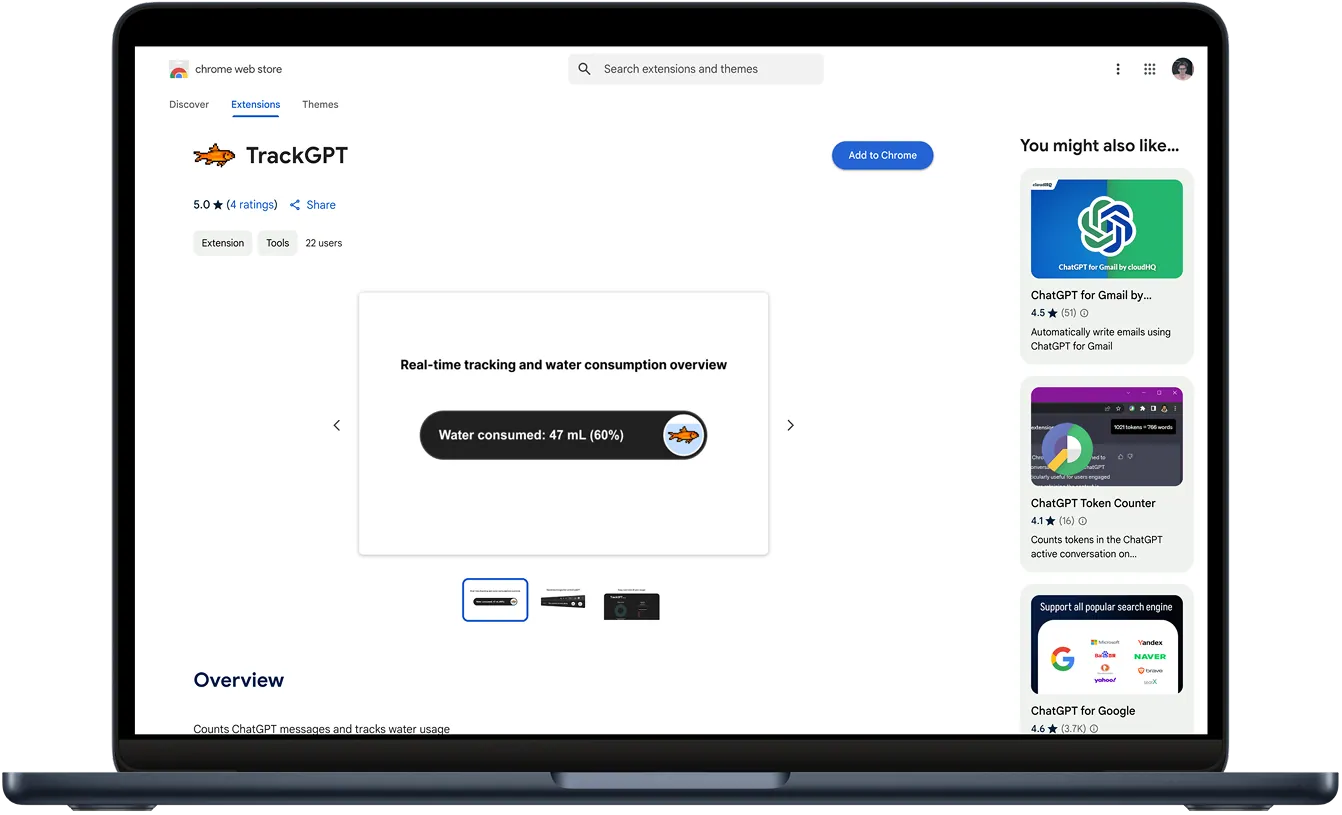
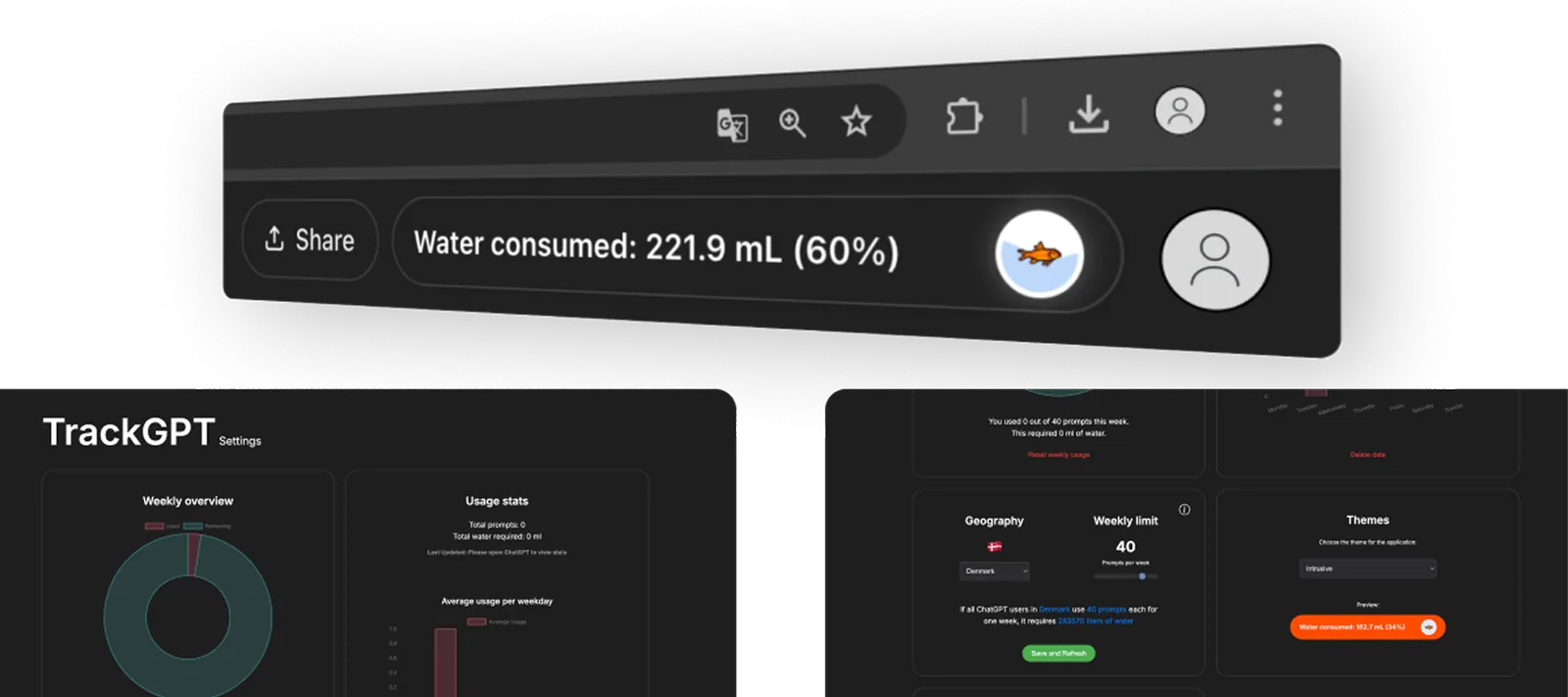
TrackGPT is a Chrome extension that makes visible the hidden environmental impact of AI chatbot services. The tool tracks users' ChatGPT interactions in real-time, visualizing water consumption through statistics and a dynamic fish tank animation that represent the resource intensity of AI systems.
By combining critical and strategic design approaches, the project aims to create awareness about AI's environmental footprint.
TrackGPT was conceived as part of the Strategic Design course on the Master's programme in Digital Design at Aarhus University and assessed with a final grade of 12.
The problem
For most of the Global North, water remains but an abundant ressource and an invisible infrastructure. However, due to global climate change drought, flooding, and water pollution is an increasing concern.
Because of this, more attention has recently been given to water systems and how to create better solutions, models and understandings of water and everything it entails.
How can we use digital technologies to aid in developing sustainable water futures?
The approach
Generating value for both organizations, consumers and society using methodology and theory from strategic and critical design traditions.
Discover
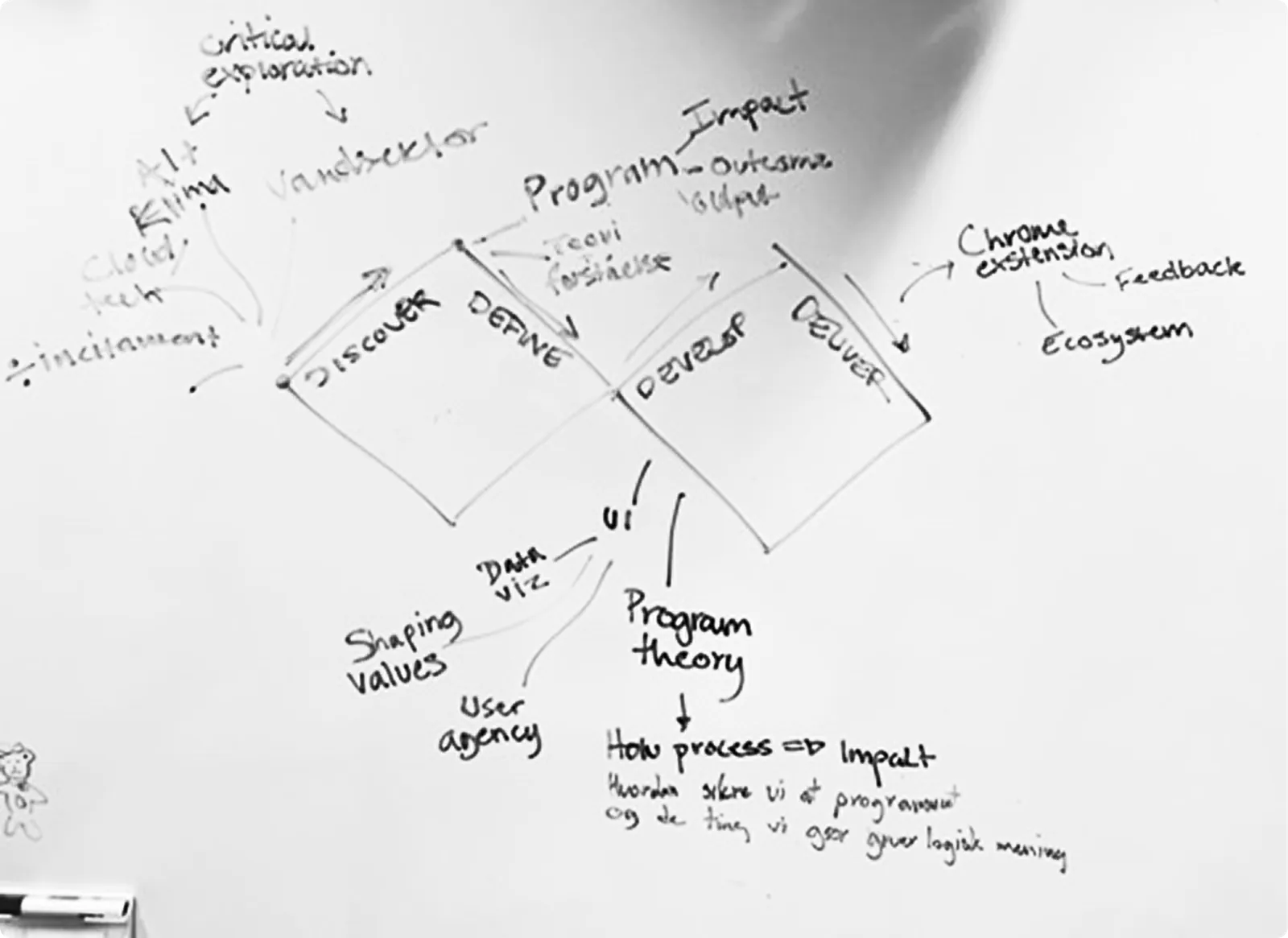
Based on preliminary desk research, we mapped out existing water management initiatives and identified current challenges in the field.
This was complemented by attending presentations and Q&A sessions with key industry stakeholders who provided insight into real-world practices and emerging concerns in the water sector.
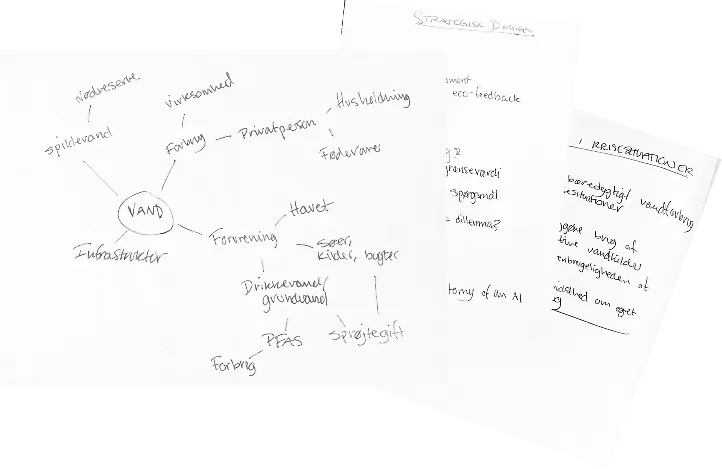
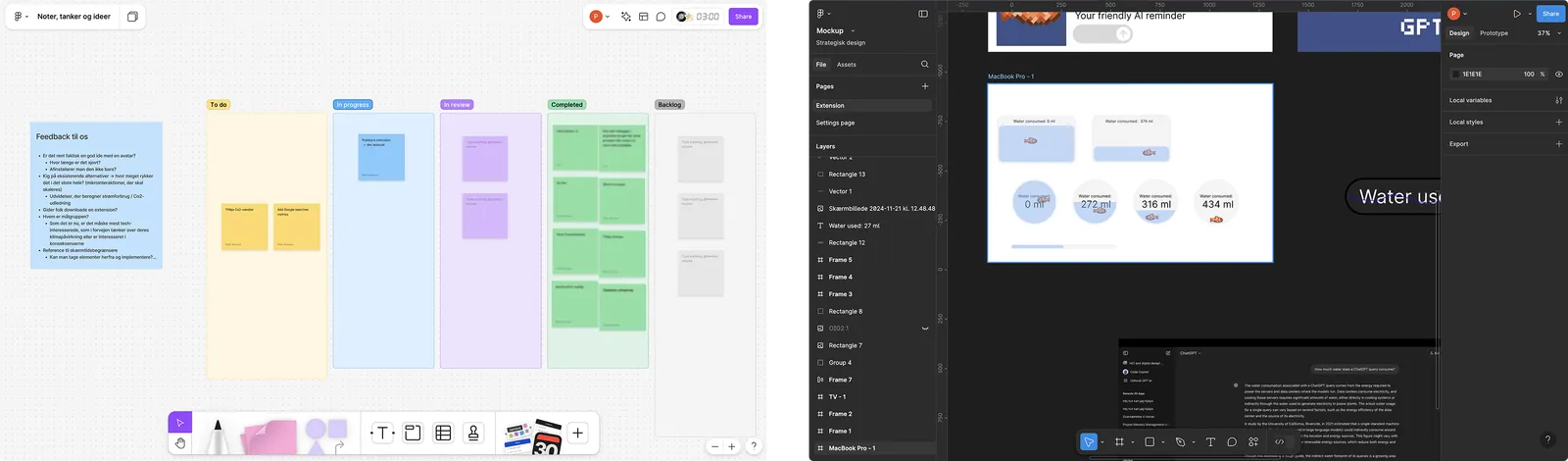
To organize and make sense of these initial findings, we conducted brainstorming and mindmapping sessions.
Findings
As it turns out, local water infrastructures were highly optimized with limited room for intervention
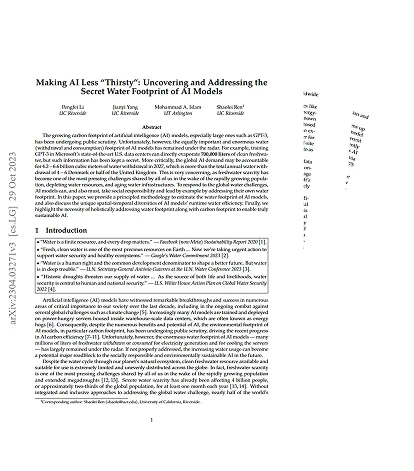
However, the environmental cost of training and running AI models remains underexplored, particularly in terms of data center water usage.
Define
Having explored different perspectives and framings of the problem at hand, we turned the question of actually determining the values and the kinds of effects our potential solution should encompass.
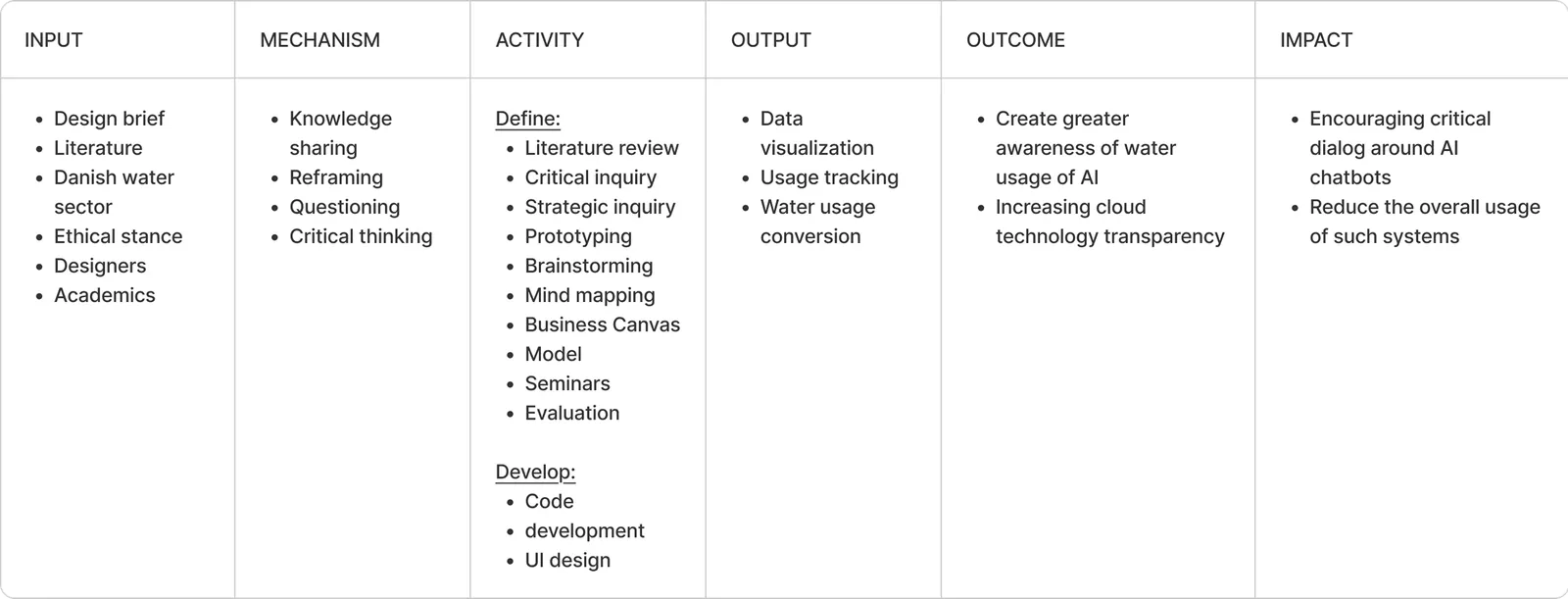
In accordance with critical design theory, we sought to create an impact by encouraging critical dialog of AI chatbots and ideally even reduce the overall usage of such systems.
To work towards this impact, our solution needs to empower individuals by offering insights and tools that enable users to make informed decisions, understand their own habits, and ultimately change them.
The mission
We ultimately aim to use digital technologies to:
- Encourage critical dialog around AI chatbots
- Reduce the overall usage of such systems
Develop
But how do we even begin moving toward this goal?
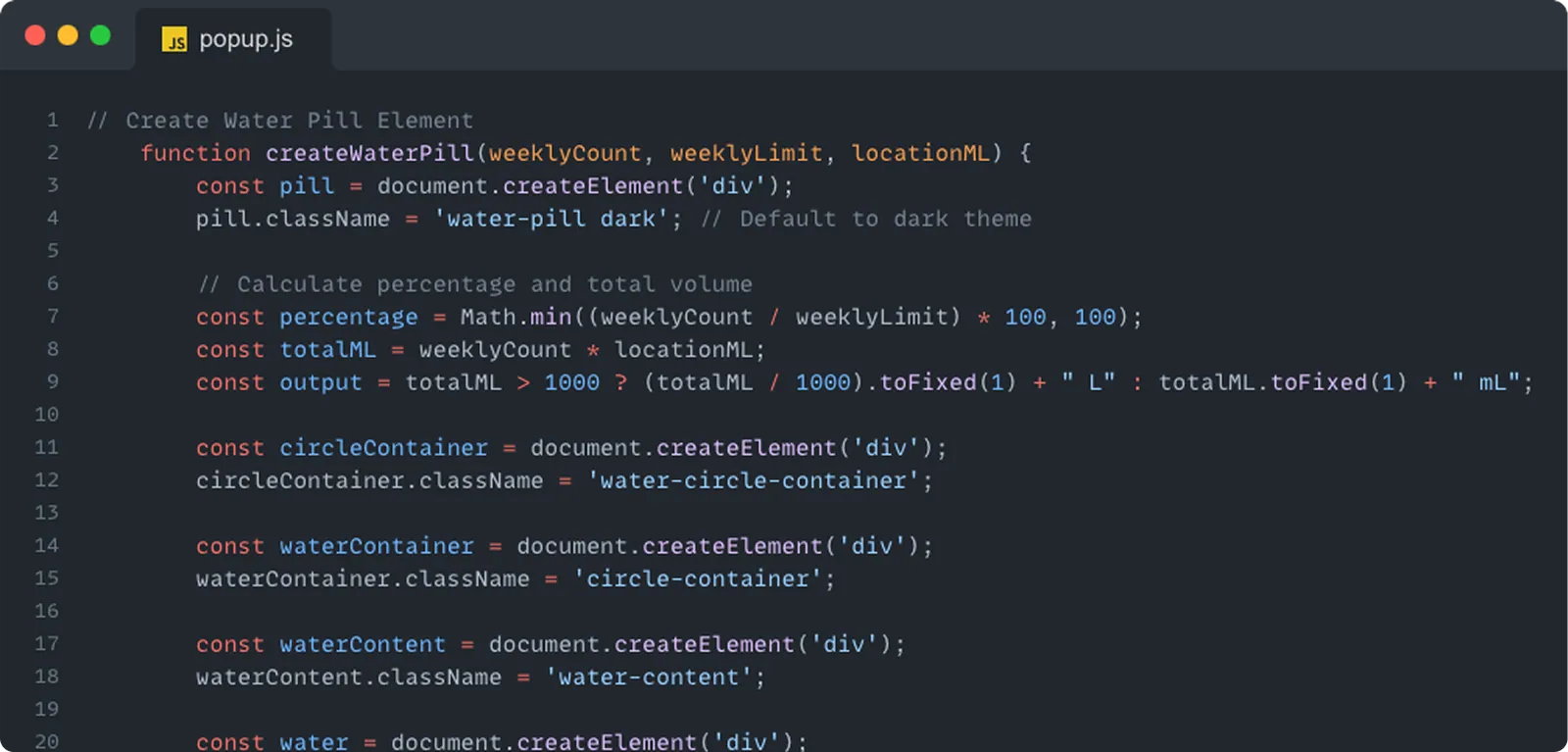
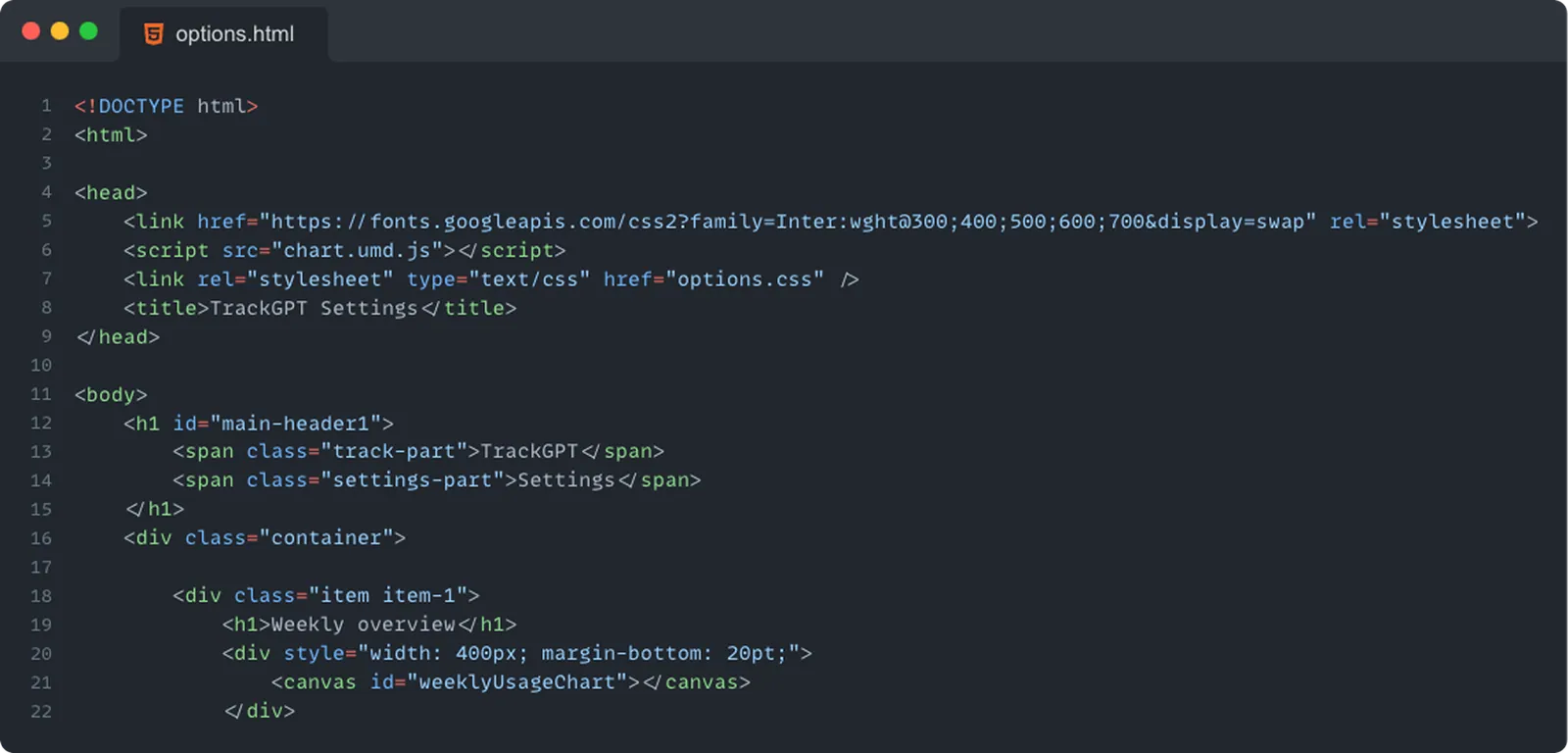
To realize our ideas, we developed a Chrome extension with real-time tracking for ChatGPT interactions, water usage conversion algorithms, and local data storage for privacy.
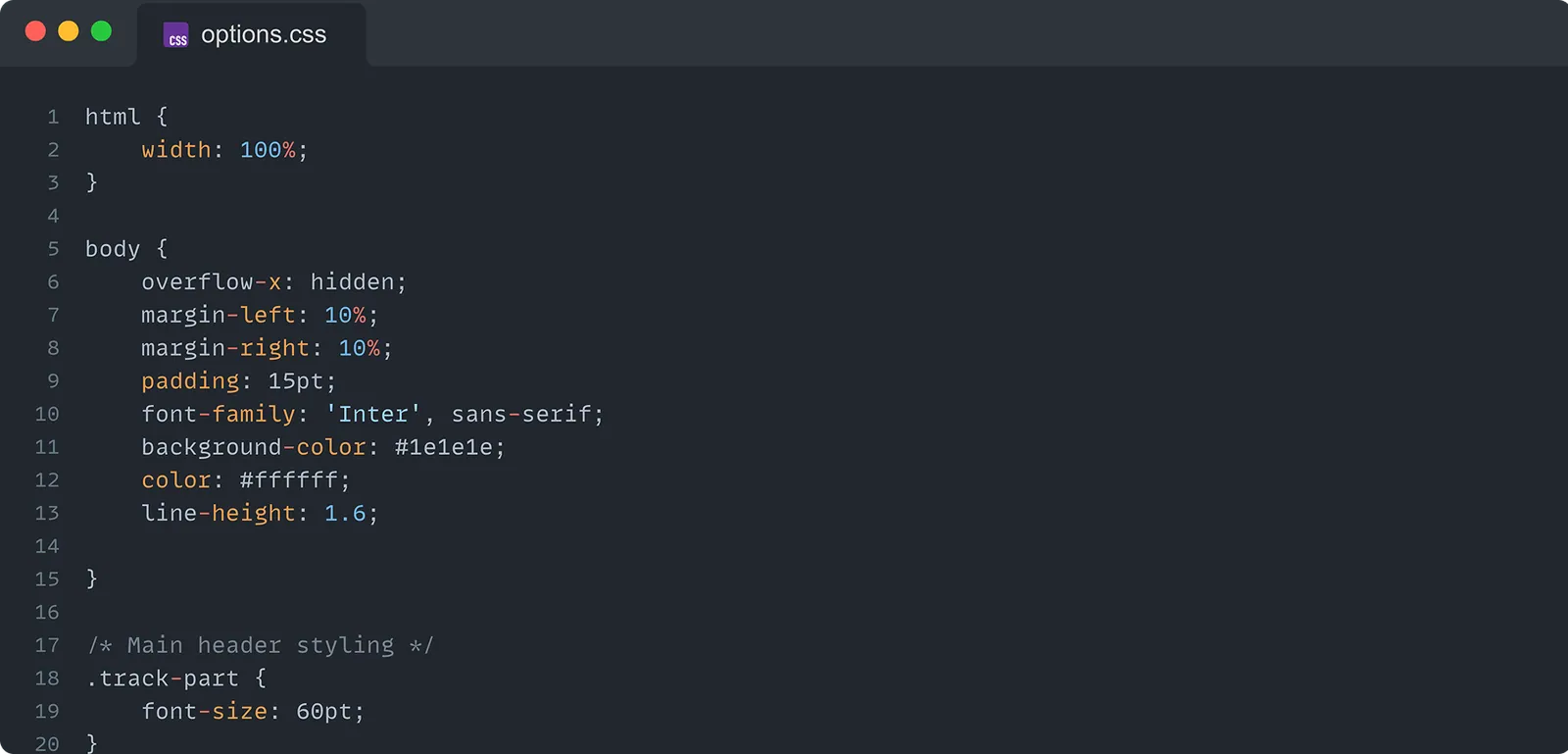
This was done using a combination of HTML, JavaScript and CSS, and based on Manifest V3, allowing the extension to run locally on Chromium-based browsers.
We sought to balance critical messaging with more or less non-intrusive design through customization options, informative visualization connecting digital actions to physical consequences, and features showing both individual and collective environmental impact.
A key feature of TrackGPT is an animated fish tank visualization partly inspired by the work “Helena” by Marco Evarissti. But while the extension must spark critical dialogue, it must at the same time provide useful tools for behavioral change.
Thus, we also implemented features which provide customization of the UI and usage limits, and statistical tools, which provide insights to personal usage
Deliver
The channels through which an organization interfaces with its customer segments is essential for several communicative functions such as delivering value propositions, helping customers evaluate these, and providing customer support.
Publishing our extension on the Chrome Web Store provides several benefits. For one, the Chrome Web Store establishes a simple installation process and straight forward setup of description and visual assets. Further, Chrome Web Store enables us to receive continuous feedback from users and monitor installation statistics.
In order to publish to the Chrome Web Store, our extension had to undergo a screening process confirming the integrity of our code in relation to security and privacy.